
Road Cycling's Ingenious Mechanism
- homagecycling
- Sep 3, 2025
- 3 min read

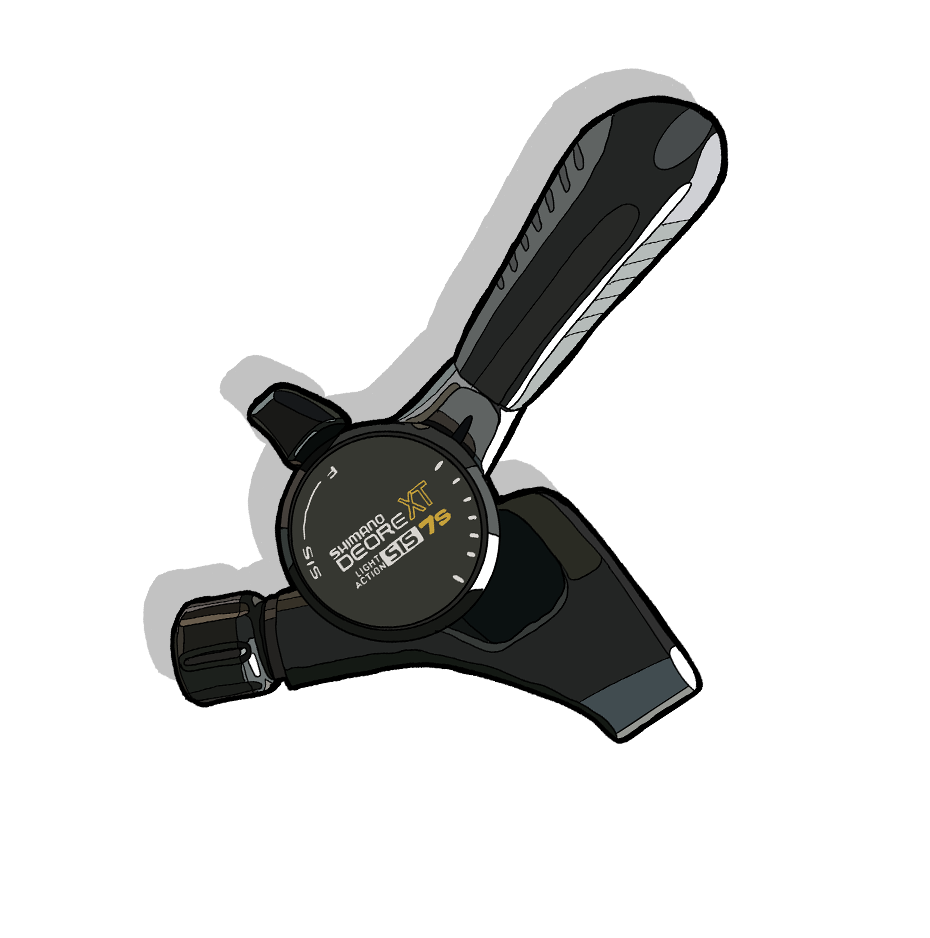
Bicycle derailleurs have long been a source of fascination for me, not only as a cycling nerd and graphic designer but as someone who cares deeply about the culture and technical artistry of road bikes. The derailleur, especially those used in road cycling throughout the 20th century, is as much an art form as it is a feat of engineering.
The Origins
The derailleur finds its origins in late 19th-century patents, such as the Protean two-speed on the Whippet safety bicycle. Among the earliest trailblazers was the French cycling legend Paul de Vivie (also known as Vélocio), who invented a two-speed rear derailleur in 1905 for epic climbs in the Alps. Even so, most early gears used rods and levers—systems that seem archaic by today’s standards.
Early innovations
By the 1920s and '30s, brands like Super Champion and Vittoria Margherita introduced mechanisms that let racers shift gears more efficiently. The true breakthrough, however, came when derailleurs became race-legal at the Tour de France in 1937. Now, cyclists could shift without dismounting—an absolute revelation at the time.
Hallmarks of 20th-Century Design
Early designs were often complicated and heavy. It was only with the rise of cable-shifted derailleurs and the parallelogram mechanism—first widely adopted in the late 1930s and early 1940s—that shifting became smoother and more reliable.
Mid-century innovations saw the arrival of now-legendary models
Campagnolo Gran Sport (1949)

A refined cable-operated parallelogram that set the template for derailleurs for decades. Many view it as the “grandfather” of modern derailleurs.
Campagnolo Nuovo Record (1960s–1980s)

Iconic for its reliability and resilient aluminium construction. Many pro pelotons and passionate road cyclists rode them for years.
Huret Allvit (1958)

Its constant chain gap design influenced future generations. Huret derailleurs became famous for their quality and lightweight builds—like the 173g Route Touriste Leger, lighter than most modern long-cage options.
Simplex and SunTour

French and Japanese brands brought further innovation, with SunTour introducing the slant parallelogram design for even crisper shifts.
Brands That Shaped the Road
Some names are etched in the minds of cycling fans forever:
Brand | Origin | c20 Contributions |
Campagnolo | Italy | Gran Sport, Nuovo Record, Super Record |
Huret | France | Allvit, Luxe, Jubilee |
Simplex | France | Early parallelogram designs |
Shimano | Japan | Began with derailleurs in 1921, modern “Tourney” in 1971 |
Suntour | Japan | Slant parallelogram in the 1960s–70s |
Throughout the second half of the century, gear options expanded: 5, 6, 7, then 8–10 speed rear cassettes became common, lightening the shifting action further and giving cyclists a far wider choice of cadence and power output.
Why I Love Them
It’s not just nostalgia. The derailleur blends precise, clever mechanics with elegant design: the sweeping lines of a Nuovo Record, the purposeful tension spring of a Huret, the functional beauty of stamped steel and polished aluminum. As a graphic designer, these shapes and forms inspire my cycling artwork—pieces sold on my site homagecycling.com as an ode to engineering, culture, and beauty all at once. Plus, nothing beats the tactile feel of friction shifting—knowing your gear changes are powered by your own hands, with a faint audible click that speaks of decades of racing heritage (not that I'm against modern electric shifting systems)
Final Thoughts
The 20th century was a golden era for derailleur innovation—a time when racing, culture, and mechanical ingenuity combined to shape the soul of the bicycle. It’s a legacy I pay homage to with my artwork.
Further Reading and Sources

Comments